Dubai has a rare ability to turn attention into economic activity. The city does not treat visibility as decoration. It treats it as infrastructure.
This is why Dubai’s business culture can be misunderstood. From the outside, the city can look obsessed with spectacle. From the inside, spectacle is often the top layer of a deeper commercial machine. A new hotel, a global conference, a restaurant opening, a founder event, a real estate launch, or a government-backed technology initiative is rarely only about the immediate announcement. It is about creating movement around a market.
Attention brings people. People bring capital, talent, demand, partnerships, and stories. Dubai has become one of the world’s most effective cities at organizing that chain.
Visibility as a market signal
Most cities wait for a sector to mature before telling the world about it. Dubai often does the opposite. It uses visibility to accelerate the sector’s formation.
This can look premature, and sometimes it is. But the strategy has a logic. If a city wants to become a hub for founders, finance, AI, hospitality, digital assets, or luxury retail, it needs more than policy. It needs the market to believe there is momentum.
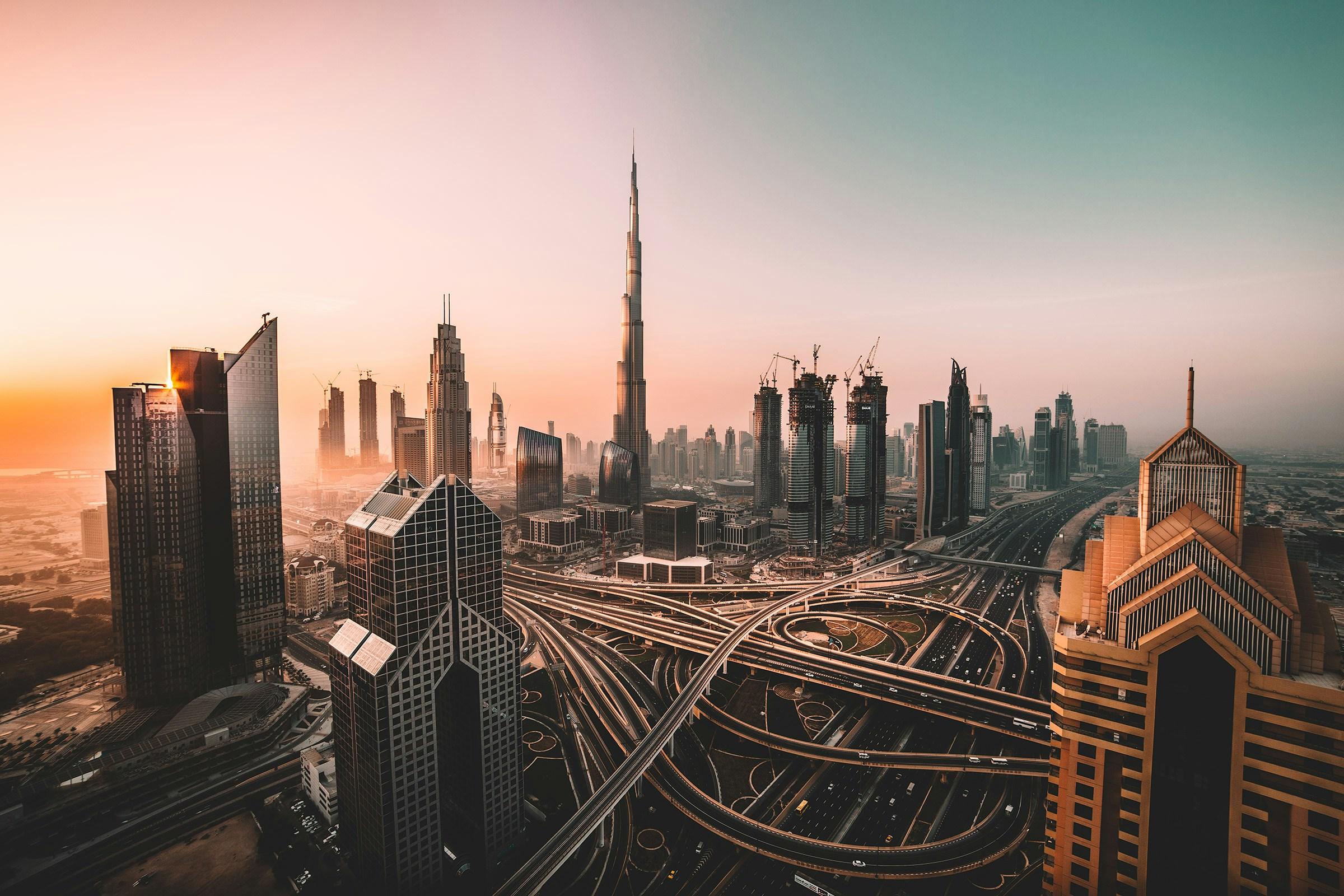
Belief is not enough to build companies, but it can attract the people who do. Dubai’s attention engine gives operators a reason to show up, explore, test, and commit.
The conference-to-company pipeline
Events are part of the machinery. A major summit in Dubai is rarely just a room of panels. It is a temporary operating system for the city’s business network. Founders meet investors. Funds meet family offices. Regulators observe market direction. Service providers find clients. Journalists find narratives. Newcomers decide whether the city is serious.
The best founders understand how to use this environment without being consumed by it. They do not attend everything. They choose rooms with intention, build specific relationships, and turn visibility into commercial follow-up.
In Dubai, attention is abundant. Discipline is the scarce asset.
Real estate, hospitality, and brand gravity
Dubai’s ability to monetize attention is visible in real estate and hospitality, but the same pattern applies across sectors. A district becomes desirable because people can picture themselves inside its story. A hotel becomes a business node because the right people gather there. A restaurant becomes a deal environment because the room has social density.
This is not superficial. Business is partly a function of where people choose to spend time. Dubai has built an economy around making time in the city feel commercially useful.
For founders, this changes distribution. A product launch can become a dinner, a community, a retail moment, a creator campaign, a hotel partnership, and an investor conversation. The line between media, hospitality, and business development is thinner here than in many markets.
The risk of mistaking noise for demand
The danger is obvious. A city that rewards visibility can also produce inflated signals. Not every crowded event means a market exists. Not every viral launch means a company has retention. Not every founder with access has a business.
Dubai’s next stage will require more editorial, investor, and operator skepticism. The market needs sharper ways to distinguish attention from traction.
That does not weaken Dubai’s attention advantage. It makes it more valuable. When visibility is paired with real operating metrics, the city can accelerate companies faster than almost anywhere else.
The attention economy, professionalized
Dubai has professionalized what many cities leave to accident. It understands that perception shapes capital flows, travel patterns, hiring decisions, and founder migration. It also understands that the global business audience has limited time and unlimited options.
The city competes by making itself legible. It gives people a reason to look, then enough commercial infrastructure to make looking worth something.
For entrepreneurs, that creates an unusual opportunity. In Dubai, attention is not the end of the strategy. Used well, it is the beginning of distribution.